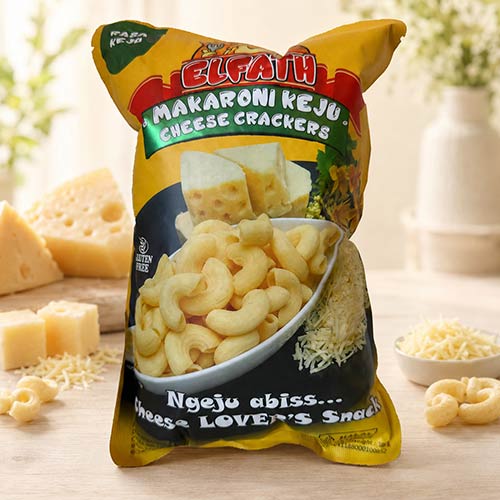
Most first emails sent to an Indonesian snack factory get a slow, vague reply for one reason: the enquiry itself was vague. A message saying “please send your price list and catalogue” gives the supplier nothing to work with. They do not know your market, your volume, your labelling rules, or whether you are a serious importer or a student doing research. So they send a generic PDF, and both sides lose two weeks.
If you are contacting an Indonesian snack supplier for the first time, the fix is simple. Put enough information in that first message for the supplier to quote properly, and ask questions specific enough that the answers actually tell you something. This guide covers what belongs in that message, what to ask, and how to interpret what comes back.
Introduce your company in three lines, not three paragraphs
Suppliers need to know who they are talking to, but they do not need your full corporate history. Cover:
- Legal company name and country of the importing entity, plus a website or social page if you have one.
- What you do — importer and distributor, retail chain buyer, food service supplier, e-commerce seller, or trading house buying on behalf of a client.
- Where the goods will land and be sold. Destination port and destination market matter more than most buyers realise, because labelling, shelf life expectations and certification requirements all follow from them.
If you already import from Indonesia or the region, say so. It signals you understand lead times, documentation and the realities of ocean freight, and you will usually get a more technical reply.
State the product interest concretely
“Snacks” is too broad. Indonesian manufacturers usually specialise — one does fried cassava chips, another does extruded corn snacks, another does baked cheese macaroni. Name the category, and if the supplier publishes a range, name the specific items or flavours you want quoted. Looking through a producer’s flavour range before writing takes five minutes and makes your enquiry ten times easier to answer.
Also state clearly whether you want:
- The supplier’s existing branded product as it is sold domestically;
- The same product with your own label (private label / OEM);
- A reformulated product — different spice level, different pack size, different seasoning system.
These three routes have completely different lead times and minimum quantities. Mixing them up in a first email is the most common reason a quotation comes back useless.
Give a volume figure, even a rough one
You do not need to commit. Say something like “initial trial order of a few hundred cartons, with a view to a mixed 20ft container every quarter if it sells.” That is enough for the supplier to tell you whether you are above or below their minimum order quantity and whether LCL or FCL makes sense.
Buyers often hide volume because they think it weakens their negotiating position. In practice it does the opposite: a supplier who cannot see the size of the opportunity will quote defensively or not prioritise your enquiry at all.
Specify the commercial terms you want quoted
Ask for the Incoterm you actually work with, and name the port. A quotation is meaningless without it.
| Term | What it covers | Best used when |
|---|---|---|
| EXW (factory, Purbalingga or similar) | Goods at the factory gate only | You have a strong local forwarder handling everything inland |
| FOB (Semarang, Tanjung Priok, Surabaya) | Inland trucking, export clearance, loading on vessel | Most common for first-time snack imports |
| CIF / CFR (your port) | Adds ocean freight, and insurance for CIF | You want one number to compare against other origins |
Also state your preferred payment structure — telegraphic transfer with a deposit and balance against shipping documents is the norm for smaller food orders, letter of credit for larger ones. Say what you are used to and ask if the supplier can work that way.
Ask for documentation, not adjectives
Anyone can write “high quality” in an email. Ask instead for the things that can be checked. A reasonable first-enquiry request list:
- Company legal documents and confirmation of who the exporting entity is — the manufacturer, or a trading partner.
- Halal certification, if your market needs it, plus the certifying body.
- BPOM registration (Indonesia’s food and drug authority) for the domestic pack, which shows the product is legally produced and sold in Indonesia.
- HACCP or equivalent food safety system documentation.
- Full ingredient list and allergen declaration, including whether the product is gluten free and what else runs on the same line.
- Nutrition data in the format your market requires.
- Shelf life and how it was established.
- Carton dimensions, net and gross weight, cartons per pallet or per container.
One point worth understanding early: Indonesian certifications like BPOM and Halal prove the product is properly made and legally sold in Indonesia. They are not automatic import approvals for your country. You will still need to handle your own registration or notification. Suppliers can provide documents and sometimes rework labels, but the import licence is your responsibility, and any supplier promising otherwise is overselling.
Say what your label and packaging need to do
Every destination has its own rules on language, nutrition panels, importer details, allergen highlighting and date format. Tell the supplier upfront what your market demands, and ask whether they can print compliant film or whether you should plan on an additional sticker or overlabel.
Also mention pack format. Retail-facing family packs behave very differently from small single-serve sachets — case count, shelf presence and freight efficiency all change. If you want both, ask whether mixed-flavour or mixed-format cartons are allowed within one shipment.
Ask about lead time honestly
A good enquiry asks for three separate numbers: sample lead time, production lead time after deposit, and typical time from factory to port. Small and mid-sized Indonesian producers usually make to order rather than hold export stock, so the production window is real and worth planning around. Ask also how peak season — the weeks before Ramadan and Idul Fitri especially — affects the schedule, because domestic demand can genuinely stretch capacity then.
Request samples the right way
Say how many units and which flavours you want, give a full courier address with a phone number, and state whether you will provide your own courier account. Ask that samples be sent in the actual export carton if possible, so you can assess how the product survives handling rather than judging a single pouch in a padded envelope.
When samples arrive, taste them, but also open the carton with a critical eye: seal integrity, breakage at the bottom of the pack, oil migration, print quality, whether the batch code and date are legible.
A workable template
Kept short, a strong first enquiry reads roughly like this: who you are and where you sell; which specific products and pack sizes you want; whether it is the supplier’s brand or private label; an indicative trial volume and target reorder pattern; the Incoterm and destination port; the certification and label documents you need; your payment preference; and a request for samples with a clear address. Close by asking for the name and direct contact of the person who will handle your account.
Send it to the address published on the supplier’s own site, not to a marketplace inbox, and follow up once by WhatsApp — in Indonesia that is a normal, professional business channel, not an informal shortcut. Note the working hours and time zone before you judge response speed; many producers work Monday to Saturday with a Western Indonesia Time office day.
Reading the reply
A useful answer engages with your specifics: it confirms or corrects your assumed MOQ, gives carton and container figures, attaches certificates rather than describing them, and asks you clarifying questions back. A weak answer restates the catalogue. If the second exchange still avoids numbers on cartons, weights and lead time, that is your signal to look elsewhere.
ELFATH Makaroni Keju produces baked cheese macaroni snacks made with real cheddar in Kaligondang, Purbalingga, Central Java, with Halal certification, BPOM registration and HACCP in place, and nine flavours across family and mini packs. Our export experience is younger than our domestic distribution, so we would rather talk through your market’s specific requirements honestly than promise blanket compliance. If you want to start that conversation, our contact page has the direct email and WhatsApp line, and the about page explains where the company came from.
Frequently asked questions
What information should I include in my first email to an Indonesian snack supplier?
Include your company name and country, what type of business you run, the destination port and market, the specific products and pack sizes you want quoted, whether you need the supplier's own brand or private label, an indicative trial volume, your preferred Incoterm, and the certificates and label documents you need. Finish with a sample request and a full courier address. That level of detail lets the supplier quote properly instead of sending a generic catalogue.
Is Halal and BPOM certification enough to import Indonesian snacks into my country?
No. Halal certification and BPOM registration show the product is properly certified and legally produced and sold in Indonesia, and HACCP shows a food safety system is in place. Your own country will still have its own import registration, labelling and food safety requirements that you must satisfy as the importer. Ask the supplier for the underlying documents early so your local registration process can start in parallel.
Should I contact an Indonesian supplier by email or WhatsApp?
Send the detailed enquiry by email so there is a written record with attachments, then follow up once on WhatsApp. In Indonesia WhatsApp is a completely normal business channel and often gets a faster reply than email. Check the supplier's stated working hours and remember Western Indonesia Time is UTC+7 before assuming a delay means disinterest.
Tinggalkan Balasan